Set preparation
How to prepare a DJ set: a practical gig checklist
Turn an event brief into a flexible musical plan, then check the files and equipment that will carry it.
The practical answer
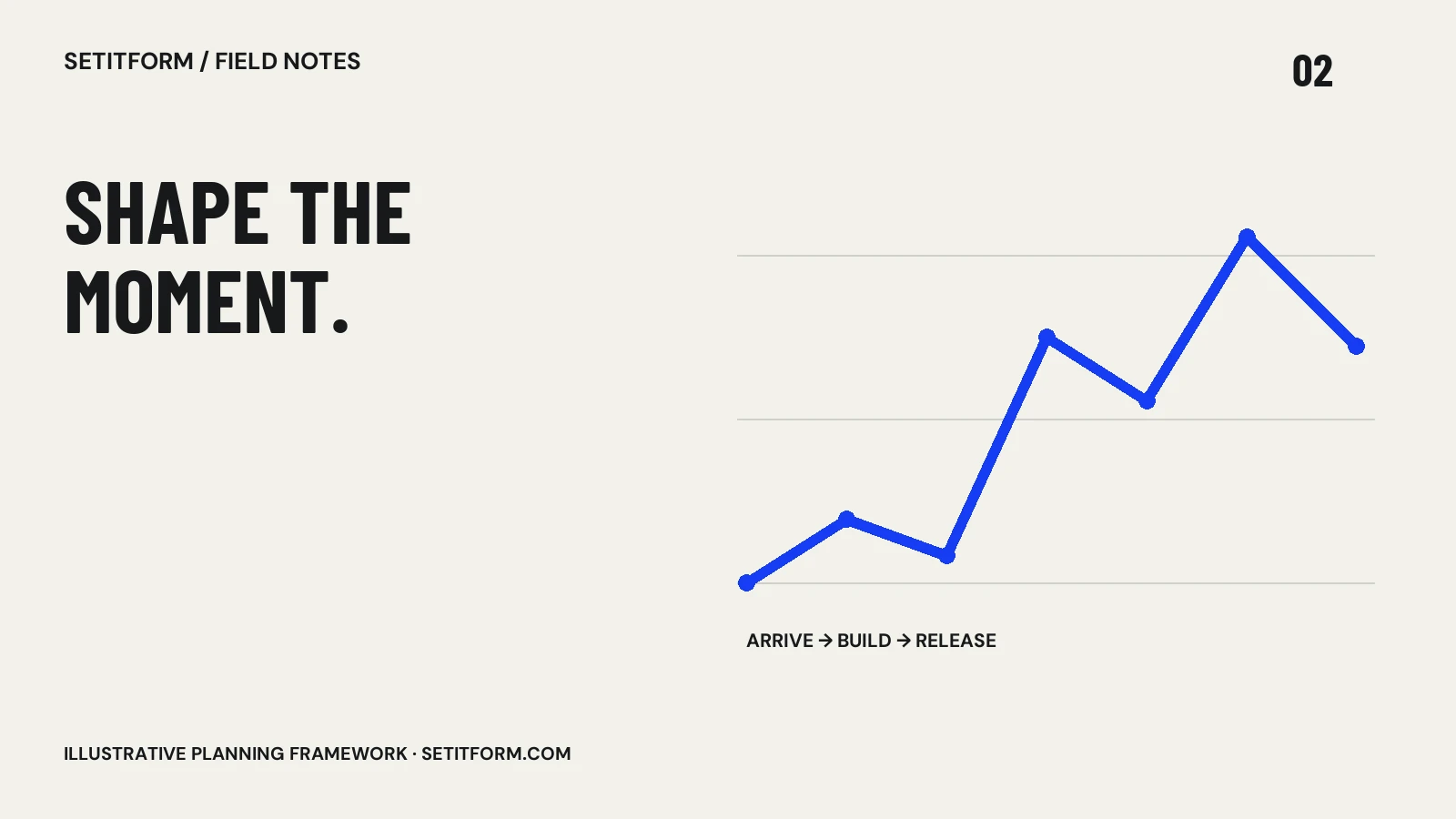
Prepare a DJ set by defining the event, building a small core sequence, keeping alternatives for different crowd responses, rehearsing difficult transitions and testing your playback media. Plan the direction of the night without locking every track into a fixed order.
Start with the job, not the playlist
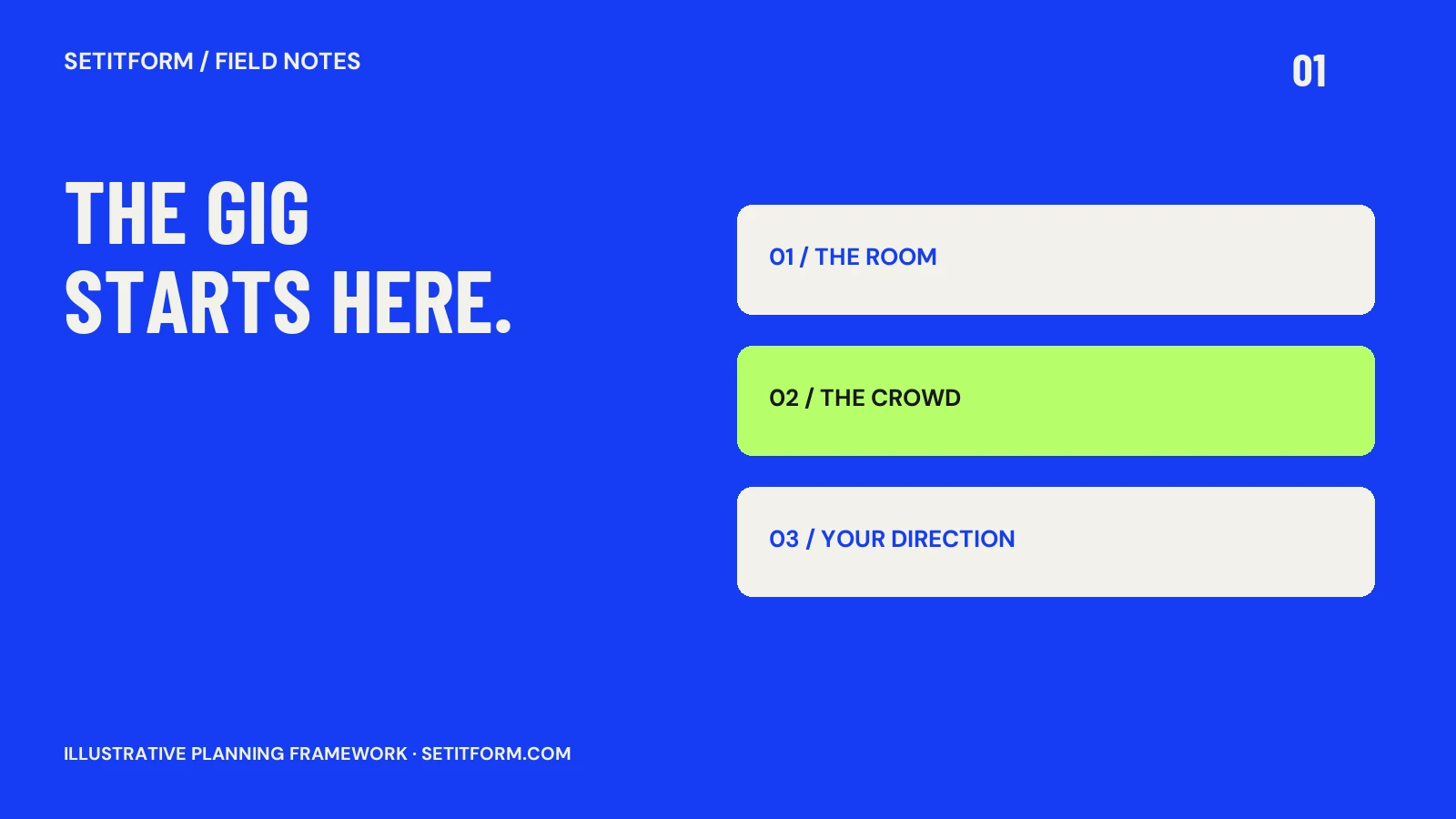
A two-hour opening slot and a two-hour headline slot can require very different decisions. Write down your start and finish time, who plays before and after you, the room’s purpose, and any music boundaries agreed with the organizer. Ask about the actual player models and available inputs. If the answers are uncertain, record that uncertainty rather than filling it with assumptions. A useful brief is short enough to read in the booth. For example: “Rooftop, 18:30–20:00, conversational arrival, deeper dancing later, hand over without a big closing moment.” This is an editorial example, not a prescription for every rooftop.
Build three layers of music
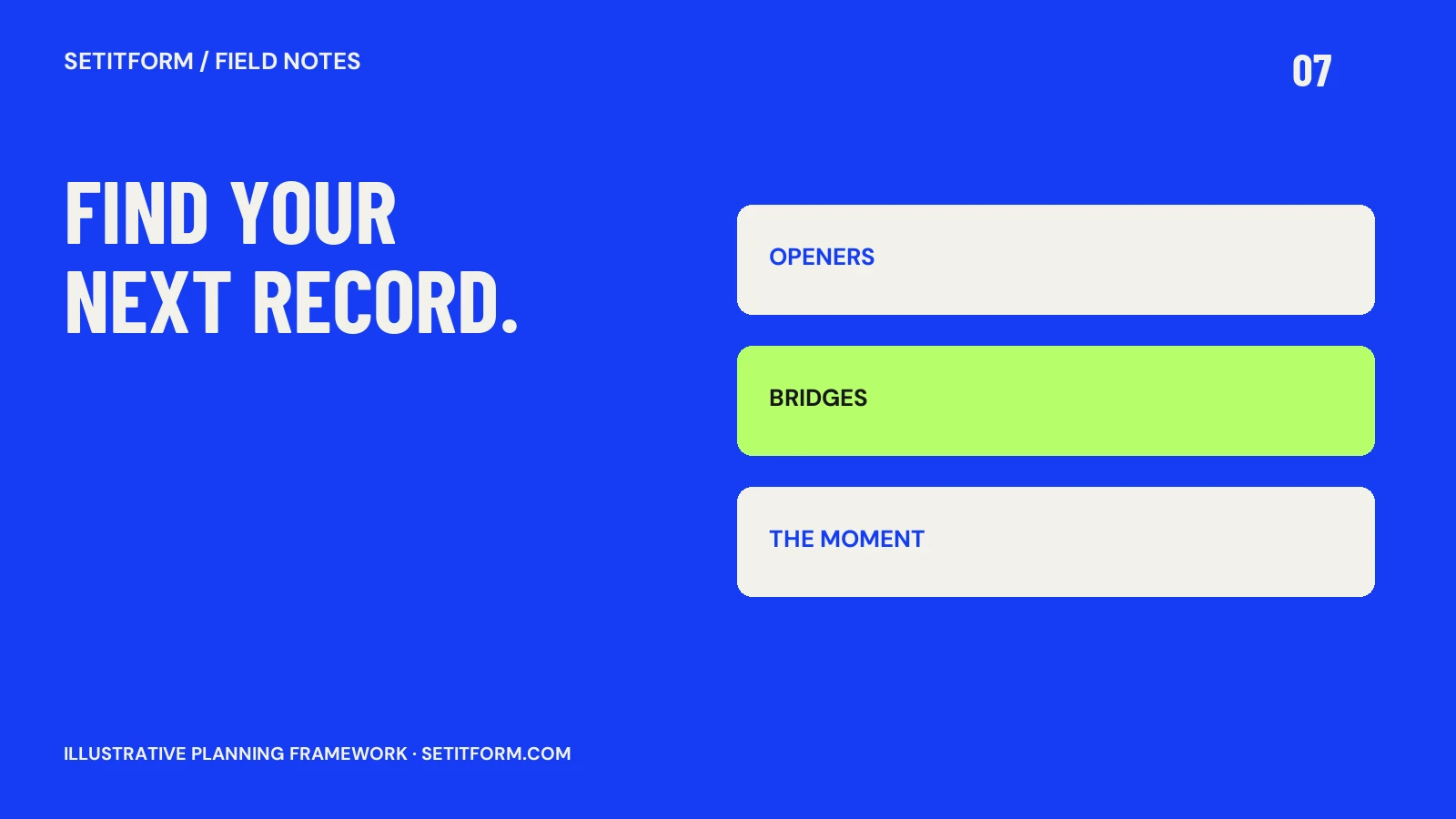
Create a core crate for the intended direction, a bridge crate for changing pace or mood, and a recovery crate of tracks you know well. Give each selection a reason to exist: welcoming opener, percussion-led connector, vocal lift, or calmer handover. Avoid treating all tracks in a genre as interchangeable. Two records at the same tempo may ask very different things of a room. Keep a few plausible next tracks in mind instead of a single mandatory successor. Your preparation should reduce decisions under pressure while preserving the ability to react.
Prepare the parts you will actually mix
Listen beyond the drop. Check the opening phrase, the arrival of the bassline, vocal overlap, breakdown length and the section where you intend to leave. Put a note beside transitions that depend on a particular cue or arrangement. For software preparation, consult your version’s documentation: Serato’s analysis guide describes waveform, BPM, key and beatgrid preparation. Analysis is a starting point; audition the result and correct mistakes before the gig. Rehearse the risky links, rather than repeating only the combinations that already feel easy.
Test the delivery chain
A playlist existing on your laptop is different from a playlist loading correctly at the venue. Check that the audio is available locally where required, the intended versions are present, the export has finished, and the player can read it. Prepare a separate backup and test it independently. A second USB copied from a broken source is not a useful recovery plan. If you rely on a permitted streaming workflow, confirm its actual offline and hardware support before depending on it. Keep your fallback simple enough to use when the booth is busy.
Use a final ten-minute review
Before leaving, open the event crate and load the opening track, one track from the middle and the intended handover option. Check your cables, headphones, media and contact details. Write a one-line plan B: what will you do if the room wants something lighter, heavier or more familiar? After the event, record one successful decision and one moment that needed a better alternative. These notes are more useful than grading the night with a vague score. Repeat the process and refine your own preparation checklist; do not mistake a longer checklist for a more musical set.
Common questions
Should I plan every track in order?
Use a fixed sequence for rehearsing difficult passages if it helps, but prepare alternatives so the event does not depend on one exact running order.
How much extra music should I bring?
Bring enough relevant alternatives to cover plausible changes and a delay or longer slot. There is no universal multiplier; familiarity and fit matter more than crate size.
Sources & approach
Preparation frameworks and examples are Setitform editorial guidance. Linked primary sources support the specific software or platform statements beside them; they do not endorse this article. Sources checked on 30 October 2026. Software and service terms can change.
Written with AI assistance and checked against the linked documentation. This article has not been independently reviewed by a named DJ. Read our editorial policy or send a correction.